World First Aid Day 2026: Be Ready, Save a Life
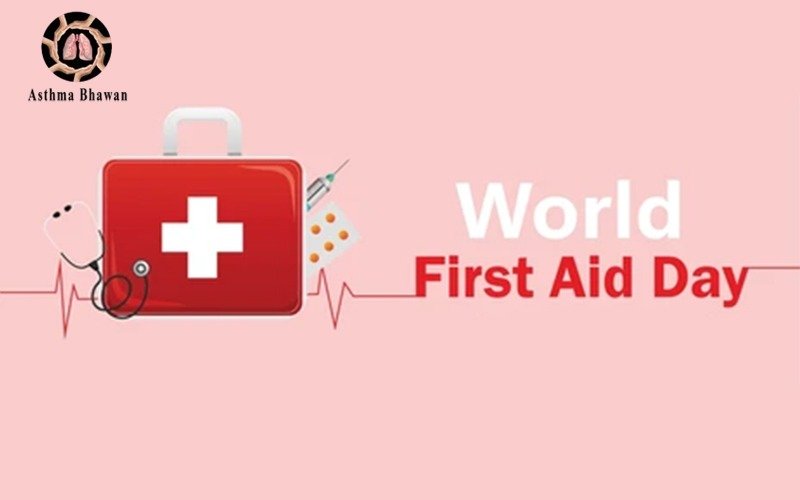
First Aid refers to the initial, immediate assistance provided to a person who has an illness or injury. Every year, the second Saturday of September is celebrated as World First Aid Day. It offers a possibility of survival and aids in the reduction of injuries. Many people have accidents every year, and the majority of them die as a result of receiving care too late. If the wounded person had received primary care, almost all fatal traffic accidents may have been avoided. On World First Aid Day 2026, Asthma Bhawan encourages everyone to be prepared to respond calmly and confidently during emergencies. Knowing how to administer first aid can be quite helpful, particularly in situations where someone has breathing problems or an asthma emergency. Be Prepared, Save a Life—because prompt action, awareness, and appropriate first-aid training may make every second matter.
World First Aid Day 2026: History
- The International Federation of Red Cross and Red Crescent Societies (IFRC) created World First Aid Day in 2000.
- In 1859, Henry Dunant, a young merchant, saw the devastation at the Battle of Solferino. He then penned the book "Memories of Solferino," which discusses his concept for a stand-alone organization to care for injured soldiers.
- As a result, the International Committee of the Red Cross (ICRC) was established, and Henry Dunant was one of its co-founders.
- On World First Aid Day, around the world, Red Cross and Red Crescent Societies host events to raise awareness of the value of first aid.
World First Aid Day 2026: Significance
- Everyone is personally trained in First Aid, allowing us to save lives while we wait for expert assistance.
- On World First Aid Day, we can begin studying First Aid exercises. We can educate people on the significance of first aid.
- The death rate can be decreased and disasters, calamities, and everyday situations can be affected by having a solid understanding of First Aid.
- We can use World First Aid Day as a chance to organize events or initiatives that will increase knowledge of first aid around the globe.
The Importance of First Aid in Emergencies
Emergencies take place when we least anticipate them. Whether they are connected to home accidents, business injuries, or traffic accidents, being prepared to act quickly helps prevent problems from getting worse. First aid not only stabilizes an injured person but also gives them comfort while they are in distress. You can lessen the severity of the injury and increase your chances of recovering completely with the correct knowledge.
Some of the main goals of first aid are to preserve life, stop the disease's course, and promote recovery. More problems can frequently be avoided by taking prompt action. For instance, the first aid administered before the arrival of paramedics is critical to survival in cases of strokes, heart attacks, or serious bleeding.
Common First Aid Situations
While many issues can be resolved with basic first aid techniques, some may need professional medical care. Among the most common situations are:
- Cuts and Scrapes: Infections can be avoided, and healing can be accelerated by knowing how to clean a wound and apply a bandage.
- Choking: One of the best methods for removing an object from a person's airway is the Heimlich maneuver, which anyone can execute.
- Burns: One of the most important first steps in treating burn injuries is to run cold water over the burn to prevent tissue damage and alleviate pain.
- Fractures: Immobilizing a shattered limb correctly minimizes discomfort and stops additional damage until medical help arrives.
- Cardiac Arrest: Until more advanced medical care is available, CPR (cardiopulmonary resuscitation) can maintain blood flow to critical organs.
- Fainting: While you wait for assistance, you can steady someone who has fainted by raising their legs or placing them in a recovery pose.
Small Actions with Big Impacts
On World First Aid Day, it's critical to keep in mind that anyone can learn how to provide first aid and that even the smallest gestures can have a significant impact. The following crucial small steps can have a significant impact in emergency situations:
- Calling for Help: The most important thing you can do is recognize an emergency and contact emergency services right away.
- Staying Calm: Maintaining composure during a crisis allows you to think clearly and make wise choices. Additionally, it eases the injured person's fear by reassuring them.
- Stopping the Bleed: Applying pressure to a wound is a simple technique that can stop significant blood loss, giving medical professionals more time to treat the condition.
- Starting CPR: Chest compressions can double or even triple a person's chances of survival when they collapse and cease breathing.
- Using an AED: Nowadays, many public spaces include Automated External Defibrillators (AEDs), which can be used to restart a stopped heart.
It increases understanding of the significance of emergency preparedness and first aid.
First aid can prevent a condition from worsening and help save lives.
Stay calm, ensure safety, assess the situation, and call for professional help.
Yes, before medical assistance arrives, prompt and appropriate first aid can make a significant impact.
Be prepared, act quickly, and assist others safely when emergencies happen.
First-aid training is available through certified medical and emergency-response organizations.